ROB SCHMITZ, HOST:
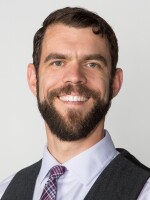
When NPR education correspondent Cory Turner walks into an elementary school classroom, he is noticed.
CORY TURNER, BYLINE: I am 6-foot-5 and 200 pounds. I do not blend in, especially in younger classrooms.
SCHMITZ: So when he's recording in these classes, he has a technique.
TURNER: I tend to, like, scoot around on the ground with my microphone. I crawl around. The kids think it's hilarious. But it also wins them over.
SCHMITZ: And his reporting about kids was fascinating - how they learn, why play is important, what makes for a healthy classroom. But in 2015, towards the end of the Obama administration, Cory shifted gears.
TURNER: And that's when I did some reporting around trying to make the FAFSA, the Free Application for Federal Student Aid, easier for students and families to fill out because it was infamously long and complex. And then the real tipping point for me was around the beginning of the first Trump administration, I ended up teaming up with one of our business reporter colleagues, Chris Arnold, to investigate a little known program that was meant to help aspiring teachers pay their way through college. And that's really when I got the student loan bug.
SCHMITZ: That student loan bug is what I asked Cory to talk to us about for this week's Reporter's Notebook. So we began there, by talking about the TEACH grant program he just referenced.
TURNER: It's one of those classic government programs that was born of good intentions and ended up working like a steel bear trap. It was intended to help aspiring public school teachers pay for college. But what ended up happening was the sort of paperwork, the hoops teachers had to go through - how much and how often they had to certify that they were who they said they were and that they were doing what they had said they were doing - meant that a huge number of the aspiring teachers who were trying to get through this program actually ended up getting their grants revoked, which meant that they then had to pay the government back. So it ended up creating these enormous debts for teachers, which was arguably the opposite of the intention of the program.
SCHMITZ: Like a reverse loan program.
TURNER: Exactly. And so when Chris and I started working on it, it was because we had gotten a tip that this program was a mess. And we got our hands on an internal review of the program that - you know, it was one of these reviews that was in utter bureaucratic ease. It was hard to parse. But there were several lines in the report where Chris and I just looked at each other, and we were like, wait, what? How many teachers? Oh, my.
SCHMITZ: Wow.
TURNER: And then we just started digging, and it still took more than a year, more than a year.
SCHMITZ: So your investigation into the TEACH grant program ended up pushing the Education Department to make big fixes to this program. Was there a moment from your reporting that has stuck with you over the years?
TURNER: Yeah, there are actually two moments, a shoutout to the first Trump administration because they did not create this problem. But the first Trump administration, the Education Department actually issued an apology to me in my microphone about this TEACH grant program, and then they fixed it. And I was really surprised and impressed by their responsiveness.
The other moment that stands out is much more personal and emotional. One of the many teachers we met along the way, her name is Kaitlyn McCollum. She lived in Tennessee. She had used the program. She had received TEACH grants. Anyway, I had the opportunity. Once we finally realized that the Education Department was going to make some fixes to help, Chris and I were able to get on the phone with Kaitlyn and actually tell her.
(SOUNDBITE OF ARCHIVED NPR CONTENT)
TURNER: You can now prove that you were still meeting the teaching requirements, you're doing what you promised you'd do, you're going to get your grants back.
KAITLYN MCCOLLUM: Are you serious? (Laughter) Ah. Oh, my God. (Crying) Oh, sorry. I'm - (laughter) oh, goodness. Oh, that is such good news. Oh, that's such good news.
SCHMITZ: Wow, Cory, that's a really emotional response there. Give us a little bit more information about her personal situation at that moment.
TURNER: I mean, the sad thing is that she was one of many teachers we had met along the way who had received these TEACH grants to help pay for college. And then, if I remember correctly, her situation, again, was mirrored by lots of teachers. There was a lot of paperwork that had to be filed by a specific day, and it had to be signed by these specific administrators. And if it wasn't, and if it didn't arrive right on the day, you were basically jettisoned from the program, and your grants became debts.
SCHMITZ: Wow.
TURNER: This is another example of - I feel like all of my investigations are just really - they're explorations of bureaucracy.
SCHMITZ: Right.
TURNER: And, you know, I love...
SCHMITZ: But they impact real people, obviously, as you just heard.
TURNER: That's the thing. And they're so boring.
SCHMITZ: (Laughter).
TURNER: They're so boring. And this is why I didn't want to get involved in student loan reporting originally because it just felt so boring.
SCHMITZ: (Laughter).
TURNER: But the boring is where the pain and the heartbreak and the change all hide.
SCHMITZ: Wow. Why is the system like this? Like, why - it seems like...
TURNER: (Laughter).
SCHMITZ: It sort of seems like - like, the system should not require journalists to look into it and then force these - the system to work properly.
TURNER: Yeah. I don't know. I wish I knew, but I can also tell you that, you know, in my time covering student loans, I've done half a dozen of these. I investigated with a colleague the Total and Permanent Disability Discharge program that, again, should be straightforward. If an American has a severe disability and student loan debt, the debt should be erased. And that's what Congress has said for years. Program didn't work.
And there were a bunch of these, where it should be a no-brainer. You investigate. You push, and you pull. You get the documents. You cultivate the sources. You know, and one of the things that happens actually is, along the way, you talk to a lot of people sort of privately, anonymously 'cause they're afraid, inside of government, and they all say the same thing, which is, oh, you're absolutely right, Cory. Like, it's not supposed to be this way, but it's just not easy to fix.
SCHMITZ: Wow. So, Cory, what are some of the stories you're working on now?
TURNER: Well, so I don't think it's overstating it to say that last year's One Big Beautiful Bill Act has introduced probably the most sweeping changes to the federal student aid system that I've ever covered. There are so many changes happening from new limits on graduate student loans to a new effort to try to hold sort of predatory schools accountable if they graduate too many students into jobs that just don't pay. They don't justify the cost of the degree.
I mean, there's so many changes, and it's been hard to - it's hard to been - cover them all. But that's really what I'm trying to do right now. And also, like, the thing I always have to remind myself - bringing us full circle to bureaucracy - if it confuses me, it really confuses the average student loan borrower.
SCHMITZ: That is Cory Turner, correspondent and senior editor for NPR's Education Desk, trying to simplify the confusion about student loans. Cory, thanks.
TURNER: You're welcome. Transcript provided by NPR, Copyright NPR.
NPR transcripts are created on a rush deadline by an NPR contractor. This text may not be in its final form and may be updated or revised in the future. Accuracy and availability may vary. The authoritative record of NPR’s programming is the audio record.